
Marriage & Civil Partnerships
Blanchards Law is a niche family law practice with divorce solicitors, mediators and collaborative lawyers.
Juliet Gordon Talks About Marriage & Civil Partnerships
The difference between marriage and civil partnership
Since 31 December 2019 couples of the opposite sex have been able to enter into a civil partnership. Following this momentous change, both opposite and same sex couples in England and Wales can now choose between a civil partnership and marriage when they formalise their relationship.
What is the difference between civil partnership and marriage? Why should you choose one over the other?
With civil partnerships being a relatively new concept, it is essential you receive the best possible and up to date advice. Whether you have been living together or have entered into a civil partnership, Blanchards Law will be able to guide you through the separation and dissolution process.
The difference between marriage and civil partnership is not just about whether you make your commitment known in a church or a registry office.
There is currently a lot of confusion surrounding this topic, so we at Blanchards Law will try to make it easier for you to understand:
From a legal standpoint, these two unions share very similar characteristics. In fact, civil partners have exactly the same legal rights in many areas of the law, including:
- Acquiring parental responsibility
- Child maintenance
- Inheritance tax
- Tenancy rights
- Full life insurance recognition
- Next of kin rights
Essentially, there are very few differences from a legal standpoint between marriage and civil partnerships. There are slight variations in terms of financial rights, for example if one partner dies then the surviving partner may receive a lower pension share than they would had the couple been married.
Who can get married?
Marriage has always been available for heterosexual couples. In 2014, legislation allowing same-sex marriage came into force in the UK. This means that marriage is open to everyone in the UK, except in Northern Ireland, where same-sex marriage is not legal. Same-sex couples who married in England and Wales will be treated as civil partners in Northern Ireland.
This means that legally, everyone aged 16 or over, not already married or in a civil partnership and not closely related to their partner can get married.
Civil Partnership
A civil partnership is a legal relationship entered into by a couple which is registered and provides them with similar legal rights to married couples.
There are a variety of reasons why couples choose not to marry, for example, those who have been married before may have personal or religious beliefs for not repeating the process, whereas others object to the religious associations of a traditional marriage and marriage ceremony.
What are the differences between a marriage and a civil partnership?
There are few notable differences:
A marriage certificate requires just the names of both partners’ fathers, while a civil partnership certificate requires the names of both parents
Civil partners cannot call themselves ‘married’ for legal purposes.
While civil partnerships do not come with the same traditional and religious connotations, the rights and obligations are almost identical to those of marriage. This extends not only to the available financial provision upon separation but also in respect of the rules of inheritance and available tax entitlements.
The similarities between marriage and civil partnership
When it comes to rights shared by civil partners, there are a number that are similar to married couples. They share the same property rights, pension benefits and the ability to obtain parental responsibility for a partner’s child.
They also have the same rights of next of kin in hospitals as married couples and are also exempt from inheritance tax.
There are more similarities than there are differences between marriage and civil partnership.
Converting civil partnership into marriage
If you entered into a civil partnership, but perhaps always wanted to be married, it is now possible. You can convert your civil partnership into a legal marriage in the UK.
Ending a marriage or a civil partnership
A marriage is ended with divorce by obtaining a decree absolute, while a civil partnership is ended with dissolution by obtaining a dissolution order, although the process is fundamentally the same
The incoming no-fault divorce is set to make ending a marriage more straightforward. Similar changes are also going to come into effect around the dissolution of a civil partnership.
This is the first major change in divorce law in decades, allowing couples to split without blaming one another. Couples will be able to divorce without one person having to prove wrongdoing on the part of the other. The incoming legislation will make it easier to dissolve a civil partnership without placing blame on your partner.
The government has not yet stated when the new legislation will be introduced.
If you have chosen to live with your partner, but do not want to enter into a marriage or civil partnership, you may think you would be considered ‘common law spouses’. However, although the terms common-law wife or husband are frequently used to describe a couple who live together, these relationships do not have legal recognition.
This could leave many people in for a shock when their relationships end and they discover they are not entitled to what they thought they were.
Please call us on 0333 344 6302 or contact us through our enquiry form. All initial enquiries are free and without obligation.If you have questions about your current representation, case or fees, Please give us a call on a free, no obligation basis, and we will be happy to discuss these and our charging structure with you.
"*" indicates required fields
Make an enquiry here
All initial enquiries are free and without obligation. During the initial enquiry call, we will listen to your current situation and if we can help you, will outline the next steps and the charges involved. You can then decide if you would like us to help you.
Click the button below to go to our enquiry form or call us today on 0333 344 6302.
This is what our clients say about us
Punam is an excellent family lawyer. She gives good sensible advice on divorce and child matters at what is often a particularly distressing time. I would not hesitate to recommend her for the most complex matters; her legal knowledge combined with her ability to see the bigger picture are invaluable.
Rob Alloway
I instructed Punam to make a financial relief application under Part III Matrimonial and Family Proceedings Act 1984. Punam is very professional, knowledgeable and kind. I would not hesitate to instruct her again on any legal matter. Thank you for all your support.
Aline Michele
Divorce is a very harrowing, stressful and personal event Punam was warm and approachable but super efficient and succinct with it. Genuinely staggered at how smooth a process she made it. I wholeheartedly recommend Punam after a very positive experience myself.
Sam Cowan
Punam is an experienced and tenacious lawyer offering warm, compassionate and intelligent advice on a wide variety of family matters. She has acted for us for over a decade both in the city and in her own practice on divorce proceedings and complex family and child matters. We would not hesitate to recommend her.
Sue Evans
Blanchards supported my difficult and complex legal proceedings. They navigated every detail with high competence and provided confidence and reassurance at every step. Was most grateful for the human touch of doing the right thing at all times, and for their comforting professionalism even when times were very tough. Fully recommend and thank you.
Steve James
Welcome to Blanchards Law
Request our FREE Divorce Guide
Free Guide to Divorce & Contact & Custody Issues matters:
- Simple 8 Step Guide to your getting your Divorce from Start to Finish
- Advice on how to get your Custody/Residence & Contact Order
- Big mistakes people make in Custody & Contact disputes & how to avoid them
- Much more!
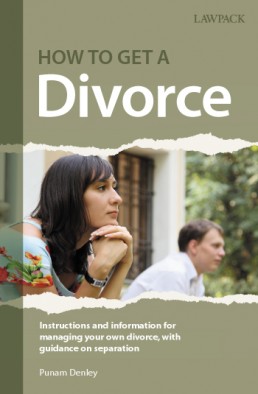
Punam Denley has written a book about divorce, financial matters and children issues
Have a read or buy it here
This is what our clients say about us
My life everything it is now, because of Punam! She is an incredible solicitor, everything I have ever approached her for was resolved successfully in my favour. I am so grateful! I found her online and after our first phone call I felt she understood me and my personal circumstance. I recommend Blanchard law wholeheartedly.
Rachel Ritfeld
Make an enquiry here
All initial enquiries are free and without obligation. During the initial enquiry call, we will listen to your current situation and if we can help you, will outline the next steps and the charges involved. You can then decide if you would like us to help you.
Click the button below to go to our enquiry form or call us today on 0333 344 6302.
Stories & case studies to help you
Please read our blogs on our marriage and civil partnerships work and practice. Like you, many client have come to us because the blogs are informative and designed to help you understand what you can do to resolve your situation.
Mediation & Collaborative Law,Latest News
What happens after an agreement is reached in mediation?
Reaching an agreement through family mediation is a significant achievement. Whether you have resolved issues relating to child arrangements, finances, property, or other family matters, mediation…
What are my Parental Rights – and Do I Have a Right to See My Child?
For many parents going through separation, one of the most urgent and emotionally charged questions is: “What are my parental rights, and do I have a right to see my child?” In England and Wales, the…
One Direction’s Liam Payne’s Estate: The Importance of Having a Will
With the recent news surrounding late superstar Liam Payne’s estate, this has highlighted an important aspect of private client law and the issue regarding what happens when someone dies without a…
Punam Denley of Blanchards Family Law Recognised in the Spear’s 500 Directory
Thames Valley and London-based family law specialist earns recommendation in prestigious Spear’s 500 guide Blanchards Family Law is delighted to announce that its founder and managing director, Punam…
Pets and Domestic Violence: Ruby’s Law
Unfortunately pets and domestic violence commonly feature together. For many people, pets are beloved members of the family. Perpetrators of domestic violence know this all too well and use it to…
Divorce & Separation,Latest News
Divorce in England and Wales: Do You Qualify?
For many of our clients, deciding to get divorced in England or Walres is obvious. They got married in England, and they have lived in England for the entire duration of their marriage. Therefore it…
Children,Divorce & Separation,Latest News
Family Court Fees Are Increasing – Why It Pays to Get the Right Advice Early
Court fees are increasing from 13 July 2026. The Ministry of Justice has announced changes to a range of court and tribunal fees across England and Wales. For those involved in family law matters,…
Children,Latest News,Wills and Probate
Understanding Fathers’ Rights in Wills and Guardianship: Why the Birth Certificate Matters in England and Wales
Do Fathers automatically have legal rights in relation to their child? When it comes to protecting your role as a father in England and Wales, many people assume that biological parenthood…
Mediation & Collaborative Law,Latest News
See It, Say It, Sorted: How Mediation Helps Families Resolve Difficult Issues
See it, Say it, Sorted……. How often have we heard this phrase when on the train or the London Underground? This message encourages passengers to notice problems and notify the British Transport…
Pet Trusts Explained: How to Provide for Your Pet After Death
The Telegraph recently ran an article explaining the plight of Karl Lagerfeld's beloved cat Choupette, whose £200m inheritance was usurped - How to leave your fortune to your dog (and make sure they…
Trust & Inheritance Issues,Latest News
What Happens if a Trustee Loses Mental Capacity?
What happens to a trust when a trustee is unable to act or loses mental capacity? There are a number of reasons why someone may choose to establish a trust, but what happens to that trust is a…
When Should I Update My Will?
This is such a common question, either when considering a Will for the first time, or if you have an existing Will which you are concerned may be out of date. In short, you may ask: When Should I…
Contact us on 0333 344 6302 for a no-obligation call